


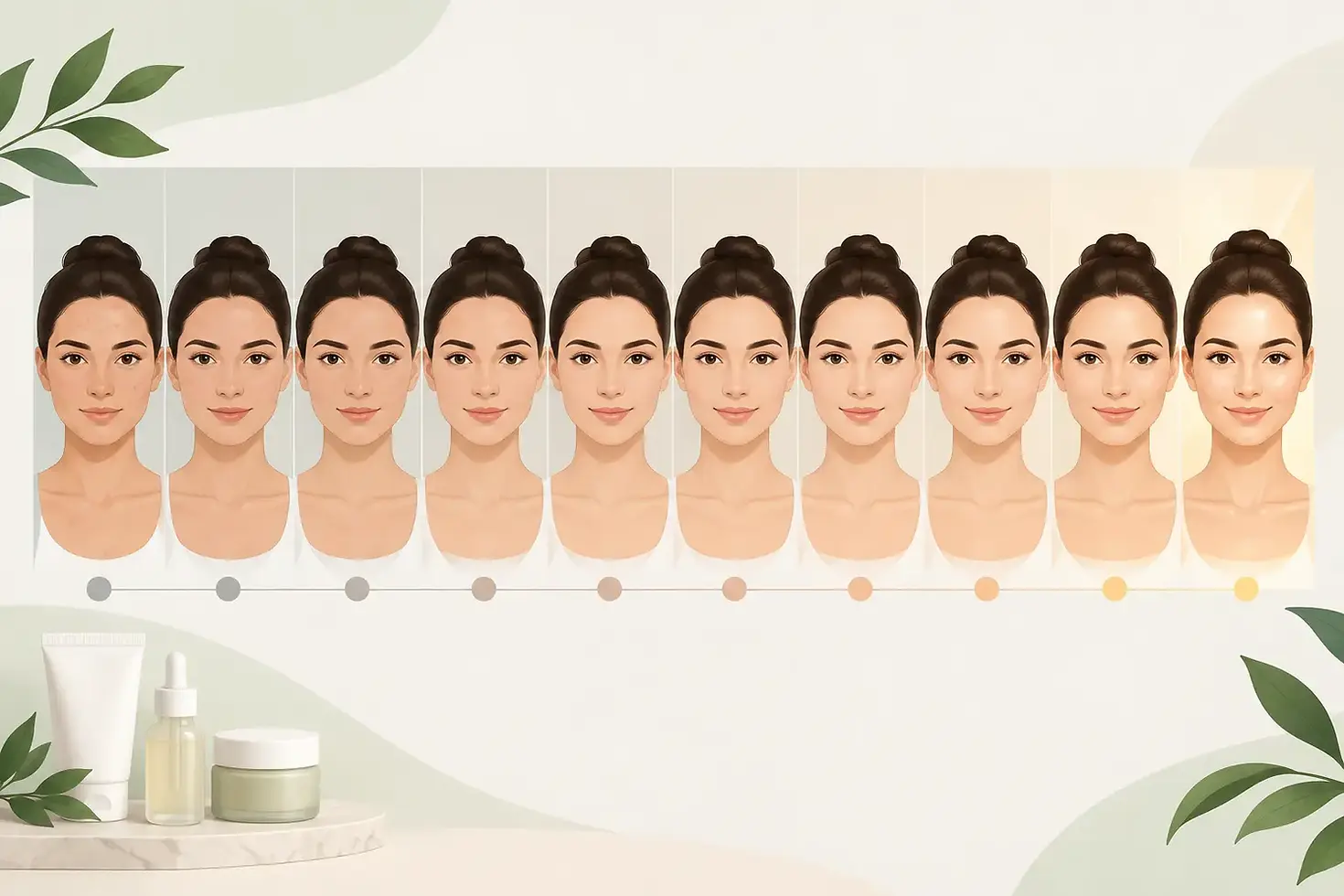
A Realistic 12 Week Skincare Glow Timeline
Hello Beautiful, the most encouraging skincare results are rarely the ones that appear overnight. They are the quiet changes you notice one morning: makeup sits more smoothly, dry patches feel less demanding, and your skin looks like it has had a good night’s sleep even when life has been full. A realistic 12 week skincare glow timeline gives your routine enough time to support those changes without chasing every new product or promise.
Skin does not follow a perfect calendar. Hormones, weather, stress, medications, travel, and your starting point all play a part. Still, 12 weeks is a meaningful window for building consistent habits and seeing whether a thoughtfully chosen routine is serving your skin well.
Why 12 Weeks Makes a Difference
Your skin is constantly renewing itself, but visible improvement has its own pace. Surface hydration may look better within days, while concerns such as uneven texture, dullness, recurring congestion, and the appearance of fine lines often need several weeks of steady care. The goal is not to force your skin into submission. It is to give it the support it needs, consistently enough to respond.
That is why a simple routine usually outperforms a crowded shelf. A gentle cleanser, a moisturizer that feels comfortable on your skin, daily sunscreen, and one carefully selected treatment can be plenty. Adding five active products at once may make it impossible to tell what is helping - or what is causing irritation.
If you are new to skincare, start slowly. If you already have a routine, resist changing everything at once. A beautiful glow is often the result of fewer decisions, not more.
Your 12 Week Skincare Glow Timeline
Weeks 1-2: Settle and hydrate
The first two weeks are about creating calm. Cleanse without stripping your skin, moisturize morning and night, and wear sunscreen every day. If you have chosen a treatment product, introduce it according to its directions rather than assuming more is better.
At this stage, your skin may simply feel softer or less tight after cleansing. That counts. For dry or dehydrated skin, makeup may begin to apply more evenly. For oily or blemish-prone skin, the early win may be less irritation from over-cleansing and over-scrubbing.
A small adjustment period can happen when you begin a new active ingredient. However, burning, swelling, persistent itching, or a worsening rash is not a sign to push through. Stop the product and seek professional advice if needed. Healthy skincare should feel supportive, not punishing.
Weeks 3-4: Notice the small changes
By the end of the first month, consistency starts becoming visible in modest but meaningful ways. Your skin may look more hydrated, feel less rough, or appear a little brighter around the cheeks and forehead. You may also notice that you need less makeup to create a polished look.
This is a wonderful time to check your routine honestly. Is your cleanser leaving your skin comfortable? Does your moisturizer still feel right as the weather changes? Are you applying enough sunscreen, including on your neck and chest? A routine only works when it fits your real life.
Take a photo in natural light at the four-week mark if you would like a clearer comparison later. Use the same place, similar time of day, and no filter. Daily mirror checks can make progress hard to see, while monthly photos often reveal a gentler, more accurate story.
Weeks 5-8: Build visible consistency
This middle stretch is where patience begins to feel worthwhile. With regular use, the skin’s surface can appear smoother and more balanced. Dry areas may be less noticeable, makeup may last better, and your complexion can begin to reflect light more evenly.
For some women, this is also when a treatment designed for specific concerns begins to show its value. That might mean fewer clogged pores, a more refined-looking texture, or a gradual improvement in the look of discoloration. Results depend on the product, the concern, and how sensitive your skin is, so avoid comparing your progress to someone else’s before-and-after photo.
If your skin is happy, keep going. If it feels dry, stinging, flaky, or suddenly reactive, simplify. Use your gentle basics for several days before deciding whether your treatment frequency needs to change. There is no prize for using an active ingredient every night if your skin prefers two or three nights a week.
Weeks 9-12: See your routine as a whole
Around weeks nine through 12, many women notice the kind of change that feels less like a quick fix and more like a healthier baseline. Skin may look more rested, feel more comfortable throughout the day, and need less effort to look fresh. That is the glow worth keeping.
This is also when you can make a practical decision: continue, adjust, or ask for help. If your skin is responding well, do not disrupt that success just because a trend is calling your name. If one concern has not improved, consider whether you need more time, a different product type, or guidance from a dermatologist.
For persistent acne, painful breakouts, melasma, rosacea, eczema, or sudden changes in your skin, professional medical care is always the right next step. Skincare can be wonderfully supportive, but it does not need to carry every concern alone.
What Can Slow Down Your Glow
A 12-week plan works best when it leaves room for real life. The biggest progress-stealers are usually not a lack of expensive products. They are inconsistency, too much exfoliation, skipping sunscreen, and constantly switching routines before any product has a fair chance.
Seasonal changes matter, too. A moisturizer that felt perfect in humid July may not be enough in a dry, heated home during winter. Likewise, a rich cream that comforts mature or dry skin may feel too heavy for someone managing congestion. Your skin type, lifestyle, and climate all deserve a say.
Sleep, hydration, and nutrition affect how you feel and how your skin appears, but they should never become another source of pressure. Start where you are. Washing your face before bed and applying moisturizer consistently can be a powerful act of care on even the busiest week.
Choosing Products Without the Guesswork
The best routine is personal. Mature skin may appreciate more cushioning hydration and gentle support for the look of fine lines. Sensitive skin often thrives with a minimal approach. Combination skin may need lightweight hydration overall with a little extra attention to drier areas. There is no one-size-fits-all glow.
When you are considering new skincare, choose based on your primary concern rather than buying every product that promises radiance. Ask yourself whether your skin is asking for hydration, smoother texture, help with breakouts, a more even-looking tone, or simply a more dependable daily routine.
At Everlasting Beauty, Renee brings more than 35 years of beauty experience to helping women sort through those choices with confidence. Personalized guidance can save you from the costly cycle of buying products that look beautiful on a shelf but do not suit your skin, schedule, or budget.
Let the Glow Be Yours
A glow does not have to mean poreless, filtered, or flawless. It can mean skin that feels comfortable, makeup that enhances rather than covers, and a routine you can return to every morning and night. Give your skin the 12 weeks, pay attention with kindness, and let steady care help you find your next favorite.


Comments